

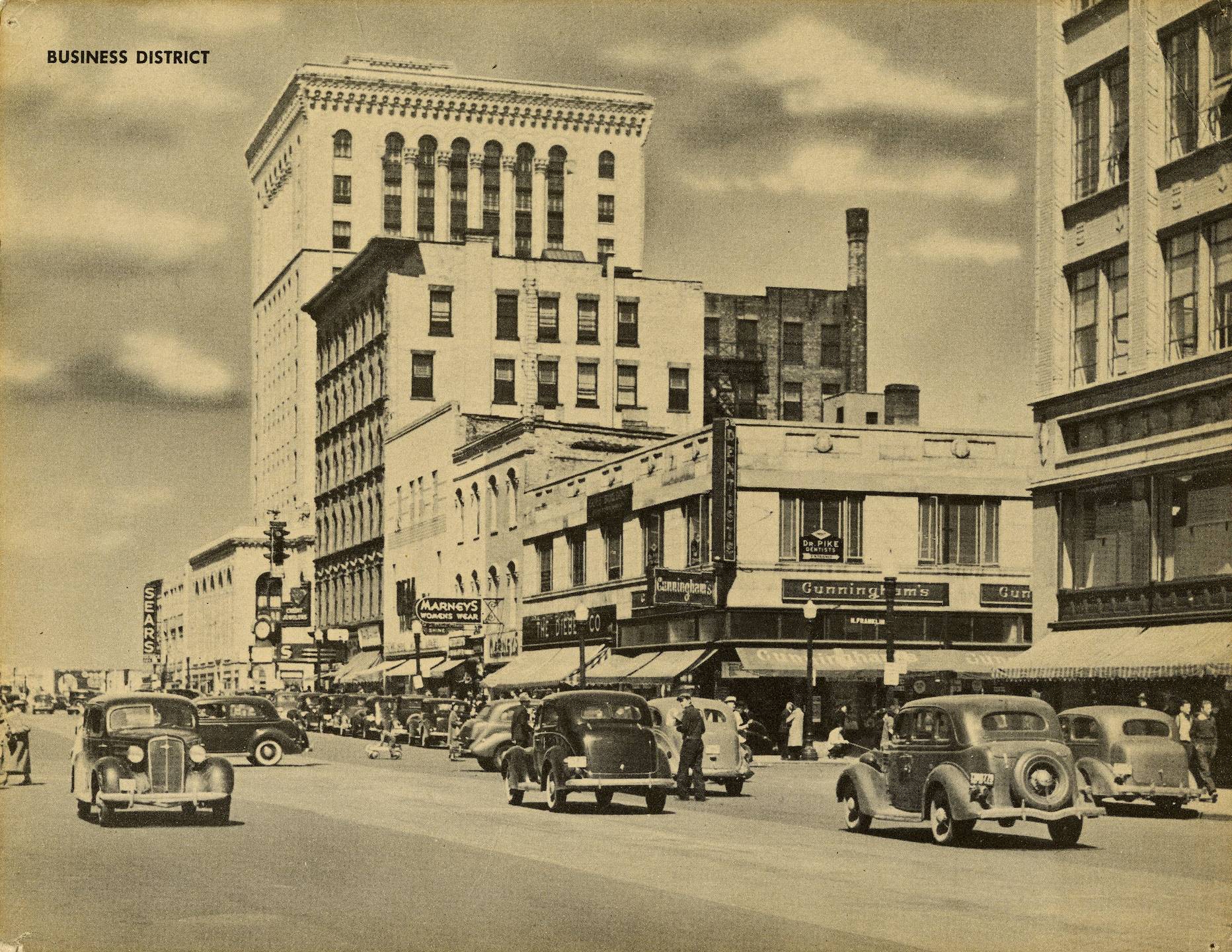
When entering downtown Saginaw, one is greeted by picturesque architecture that tells a tale of historical significance in every brick and stone. The buildings stand as records of time, wearing the weathered stories of a bygone era. Among these buildings stands the Bancroft. The first of its kind in East Saginaw and a tribute to lumber baron Jesse Hoyt who saw a distinct future for Saginaw.
Born in March 1815 in New York, Jesse Hoyt never lived in Saginaw but his love and passion for the city permeates through the fabric of the community. He was heir to a legacy of prosperity, as his father James Hoyt was a prominent and affluent merchant. James entered a business endeavor with partner Norman Little to forge a new urban frontier in the wilderness of Michigan. United by ambition, James and Little drew up the blueprint for a city that would form along the banks of the Saginaw River.
Originally, Little and Hoyt wanted to develop Saginaw but fate charted a different course. The obstacles they encountered eventually steered them toward the birth of East Saginaw. In this change of course, young Jesse Hoyt was entrusted with his father’s venture. By taking over the project, Jesse was given the opportunity to carve his own legend in East Saginaw.
Skepticism loomed as the softspoken Jesse Hoyt stepped into his father’s shoes. Could this mild-mannered and modest man hold his own among the robust and raucous energy of East Saginaw? The doubters questioned, but Jesse responded with a quiet determination, continuously pushing forward.
The dawn of this new era saw Jesse orchestrating a project that would open up Saginaw to the rest of the world. A wooden plank road was constructed that stretched from Saginaw to Flint, putting Saginaw on the map.
As the river of time flowed, change was inevitable. Jesse’s father passed away in 1854 and Jesse established Jesse Hoyt and Company. A few years later, this company would undertake the construction of the Bancroft Hotel, beginning the development and transformation of East Saginaw.
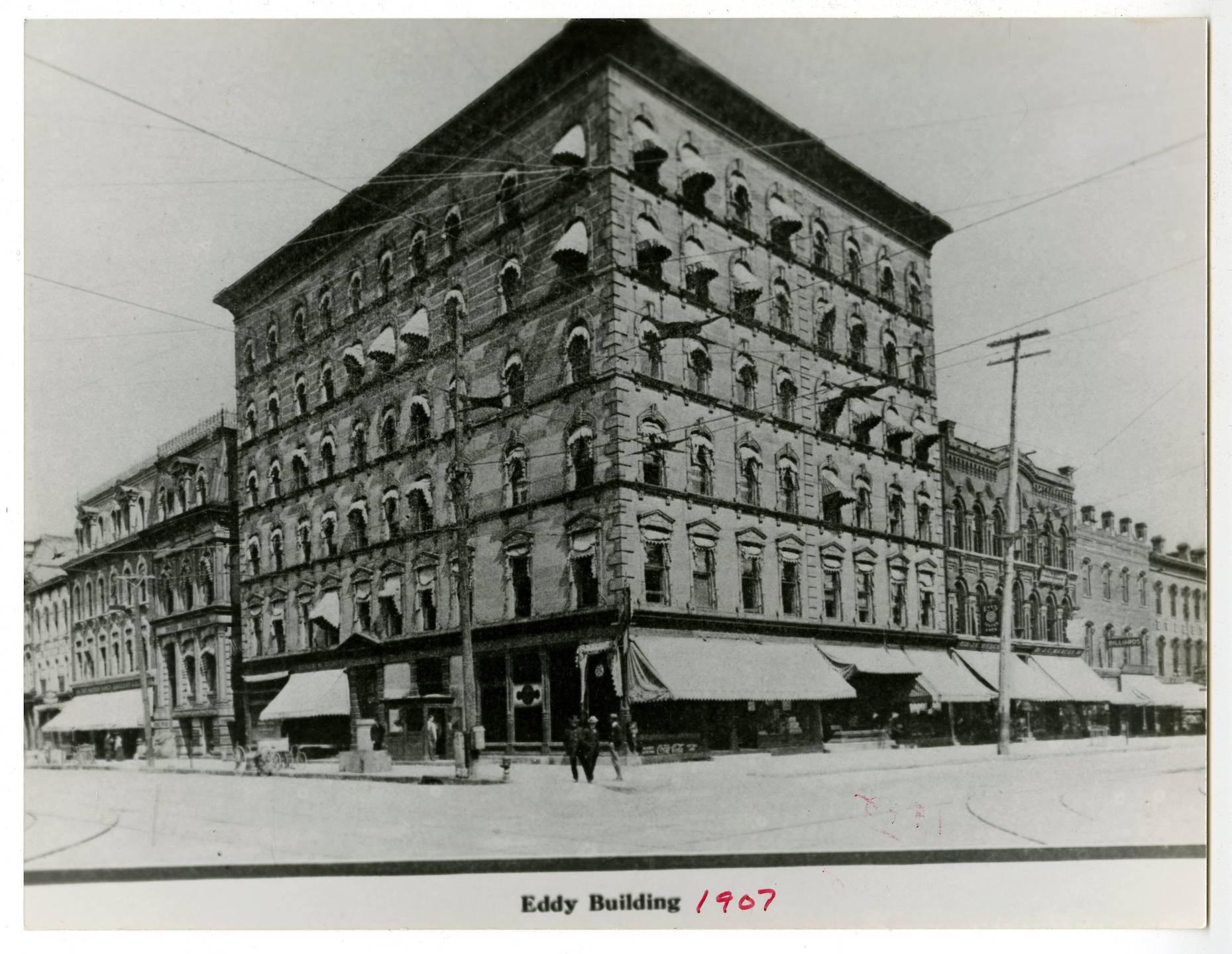
Named after Jesse’s friend, George Bancroft, the inaugural Bancroft Hotel was erected in 1859 and became the catalyst for the burgeoning community. The hotel was four stories tall with gas lighting and steam heating as well as two bathing rooms with water supplied from the Saginaw River. By the 1880s, the Bancroft Hotel was encircled by commercial and industrial businesses, solidifying its place as a vital nexus in the growth and development of Saginaw.
Outsiders were doubtful of the grand hotel’s success. A visiting writer from a Detroit newspaper remarked, “A man who would erect so fine a hotel in a swampy little valley must possess more money than brains.”
However, Hoyt’s faith in the future was well-placed, as the town began to take shape around the hotel that had drawn derisive comments. Hoyt’s visionary prowess didn’t end at the Bancroft’s doorstep. As the chatter about the hotel buzzed, Hoyt remained undeterred and continued to shape the city, engaging in a myriad of enterprises. Among his ventures, he aided in the establishment of the East Saginaw Salt Works, an initiative that grew to 42 salt works by the year 1870. Hoyt then extended his influence to the waterfront, constructing a shipyard along the river.
Still not content, he cleared tracts of land for farming in an effort to entice new settlers to move to the region. These are just a few of his endeavors that followed after the construction of the Bancroft Hotel, which proved to be the spark that started it all.
The construction of the Flint and Pere Marquette Railroad was a monumental stride in propelling Saginaw forward. As the first train made its arrival, residents gathered with anticipation. The significant moment was filled with speeches, fanfare, and music. Amid the celebration, a few voices pierced through, casting doubt upon the locomotive’s age and humorously naming it “The Polliwog.” However, such skepticism was nothing new to Hoyt who remained unperturbed.
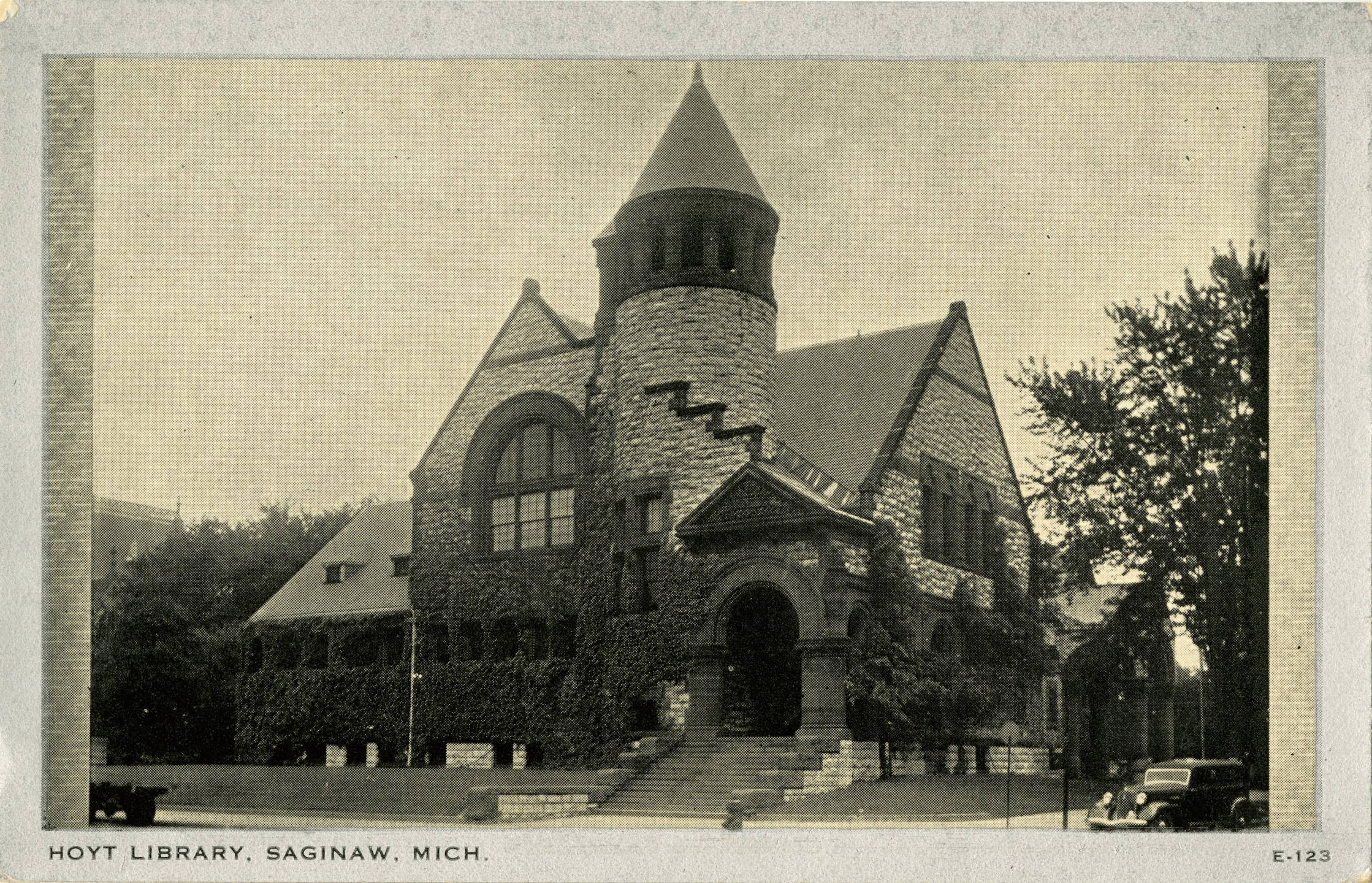
While Saginaw was not his permanent residence, Hoyt’s visits to the city were frequent, reflecting his fondness for the town. With an eye fixed on a promising tomorrow for Saginaw, he left behind a significant piece of land, home today to Hoyt Park on South Washington Avenue. Additionally, he gifted a substantial donation of $100,000, intended for the building of a free reference library. This contribution led to the creation of the Hoyt Library at 505 Janes Ave., which has since become a beloved part of the Saginaw community.
In an era where lumber barons were often disparaged as “robber barons” and ruthlessness was deemed a virtue, Jesse Hoyt stood as a beacon of integrity, honesty, and class. Hoyt was not just a visionary entrepreneur, but a benefactor who embraced the city’s potential and etched his name upon its heart.
The journey began with the construction of the Bancroft Hotel, an enigmatic addition to the region that left residents questioning the need for such an extravagant edifice. Nevertheless, Hoyt’s intuition remained true; the city expanded to fulfill the potential the Bancroft Hotel’s presence promised.
Even after Hoyt’s passing, the spirit of the Bancroft endured. Evolving with the city, the hotel transformed to satisfy the needs of the community, a testament to Hoyt’s foresight. The original hotel met its end in 1915, giving way to a new building, boasting 200 rooms and awe-inspiring architecture.
Mirroring the changing times, the Bancroft responded to shifting needs and demands. During the roaring twenties, the hotel housed a rooftop garden where one could engage in live entertainment, dining, and dancing. The hotel then expanded with the addition of another 100 rooms. However, in the mid-20th century there were multiple changes in ownership that led to financial hardship. In 1981, a development firm acquired the Bancroft, transforming it into subsidized housing. By the 1990s, the building began facing more challenges and struggled to continue. In 2011, its owners came to the realization the Bancroft could no longer sustain its role in subsidized housing.
Two years later, a management company purchased the Bancroft building and undertook another transformation, turning it into luxury apartments. Today, these apartments stand as tribute, immortalizing Jesse Hoyt’s legacy within the stone of the building.
Through the ebb and flow of changes that sweep through the city, the Bancroft maintains its towering presence as a reminder of Saginaw’s roots and the boundless potential that still lies ahead.



Thanks for your sharing your research and well written article Sarah. I can see that you have a passion for our local history. Keep up the good work! -A
LikeLike